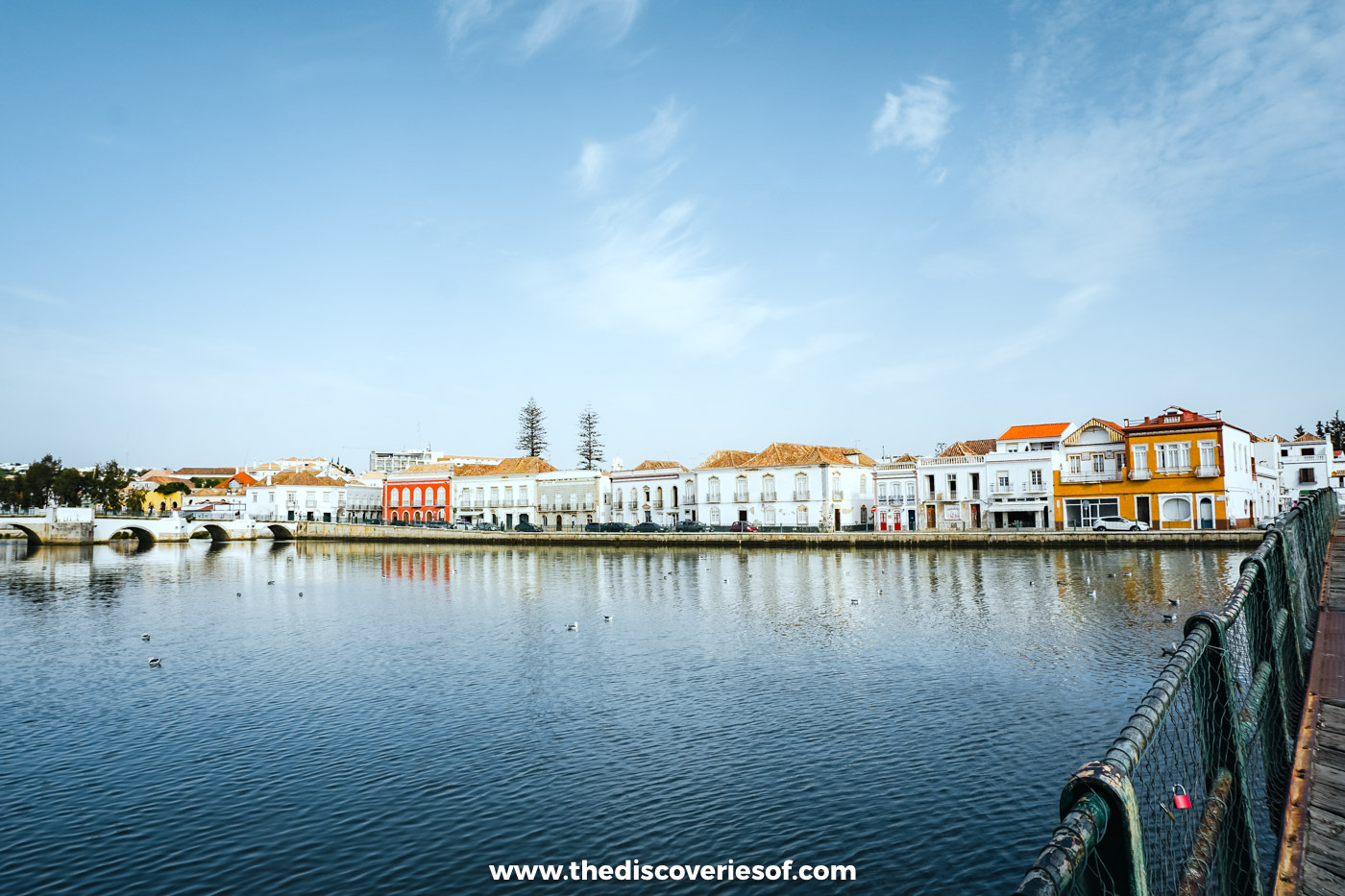

Why are more than 200 rusting anchors lying half-buried in the dunes outside a small Algarve town? Tavira holds the answer, along with Moorish walls, tiled façades, a church tower around every corner and lagoon islands you can only reach by boat or by a pint-sized train. Here’s how to spend your time there, what’s worth the short hop east to the Spanish border, and how to get the most out of a few days in the eastern Algarve.
I’ve lost count of my trips to Portugal, from Lisbon weekends to harvest time in the Douro Valley, but if you asked me to name the most picturesque town in the Algarve, I wouldn’t hesitate. It’s Tavira.
I came here during an October week in the eastern Algarve. The town straddles the Rio Gilão a few kilometres in from the sea, with whitewashed houses, tiled fronts, steep hipped roofs and more churches than seems reasonable for a place of its size. There are no high-rise hotels and no strip of bars, and for my money it’s still one of the most underrated corners of the coast.
It also makes a brilliant base. The lagoons and barrier islands of the Ria Formosa sit on the doorstep, Praia do Barril and its anchor cemetery are a short drive away, and the old border towns of Castro Marim and Vila Real de Santo António are close enough for an afternoon. This Tavira travel guide covers all of it, plus the practical bits: ferries, trains and where to base yourself.
Tavira at a glance
- Where: the eastern Algarve, on the Rio Gilão, about 30km east of Faro and 30km west of the Spanish border
- Getting there: trains from Faro take 26 to 40 minutes and run around 40 times a day; by car it’s about 35 minutes from Faro airport
- Time needed: a day covers the old town; two or three let you add the island beaches, Barril and a trip to the border
- Best for: history, slow wandering, lagoon wildlife and long sandy beaches
- Good to know: the ferry to Ilha de Tavira from the town centre runs from late March to the end of the season in autumn, but boats from Quatro Águas cross all year
The best things to do in Tavira
Wander the old town on both banks of the Gilão
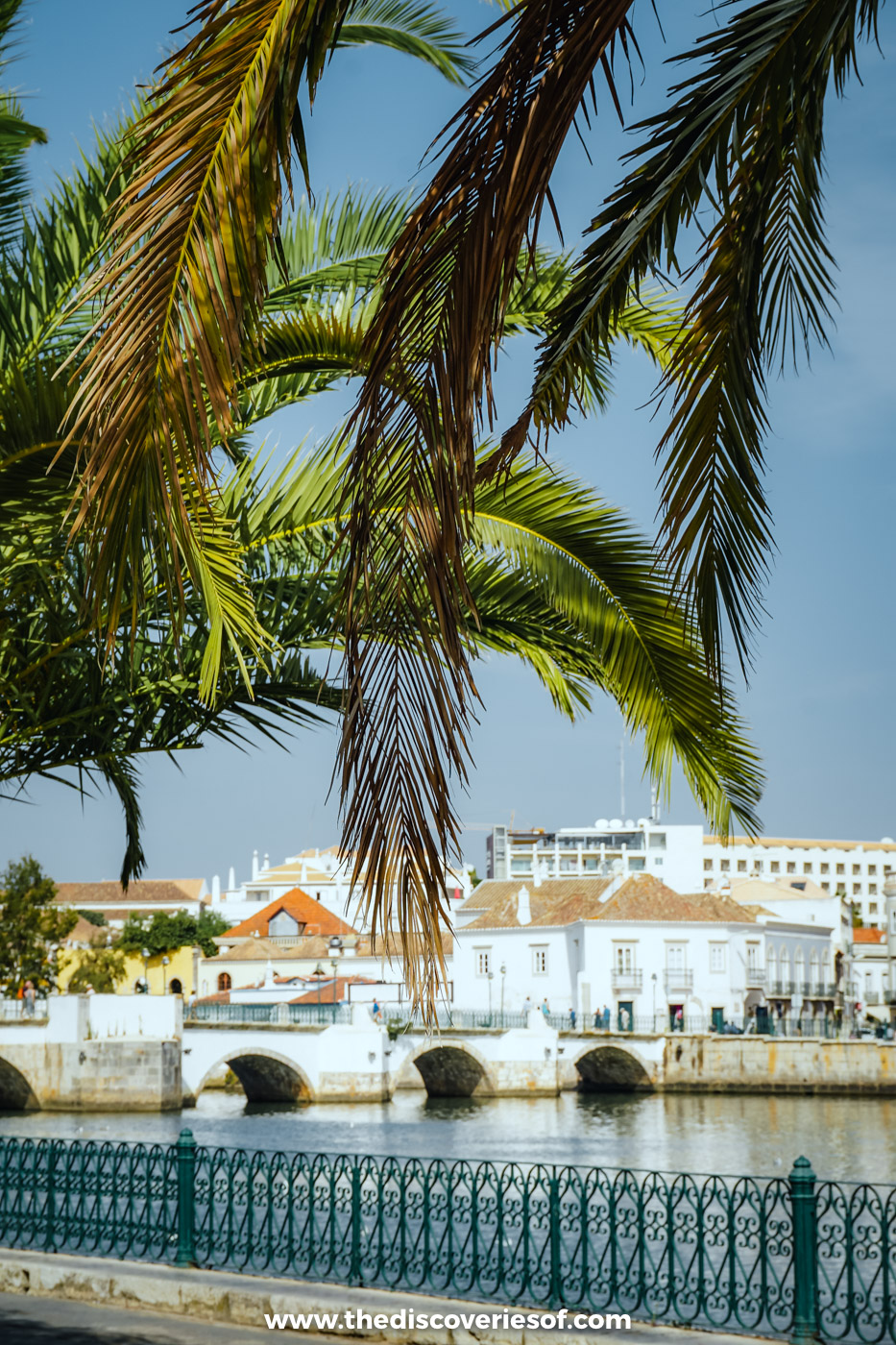
Half the pleasure of the town is simply walking it. The two halves face each other across the Gilão, joined by the Ponte Antiga, a seven-arched bridge more than 80m long that most people still call the Roman bridge. Recent studies date it to the medieval period or later, it was largely rebuilt around 1655, and since a violent flood in 1989 it has been for pedestrians only.
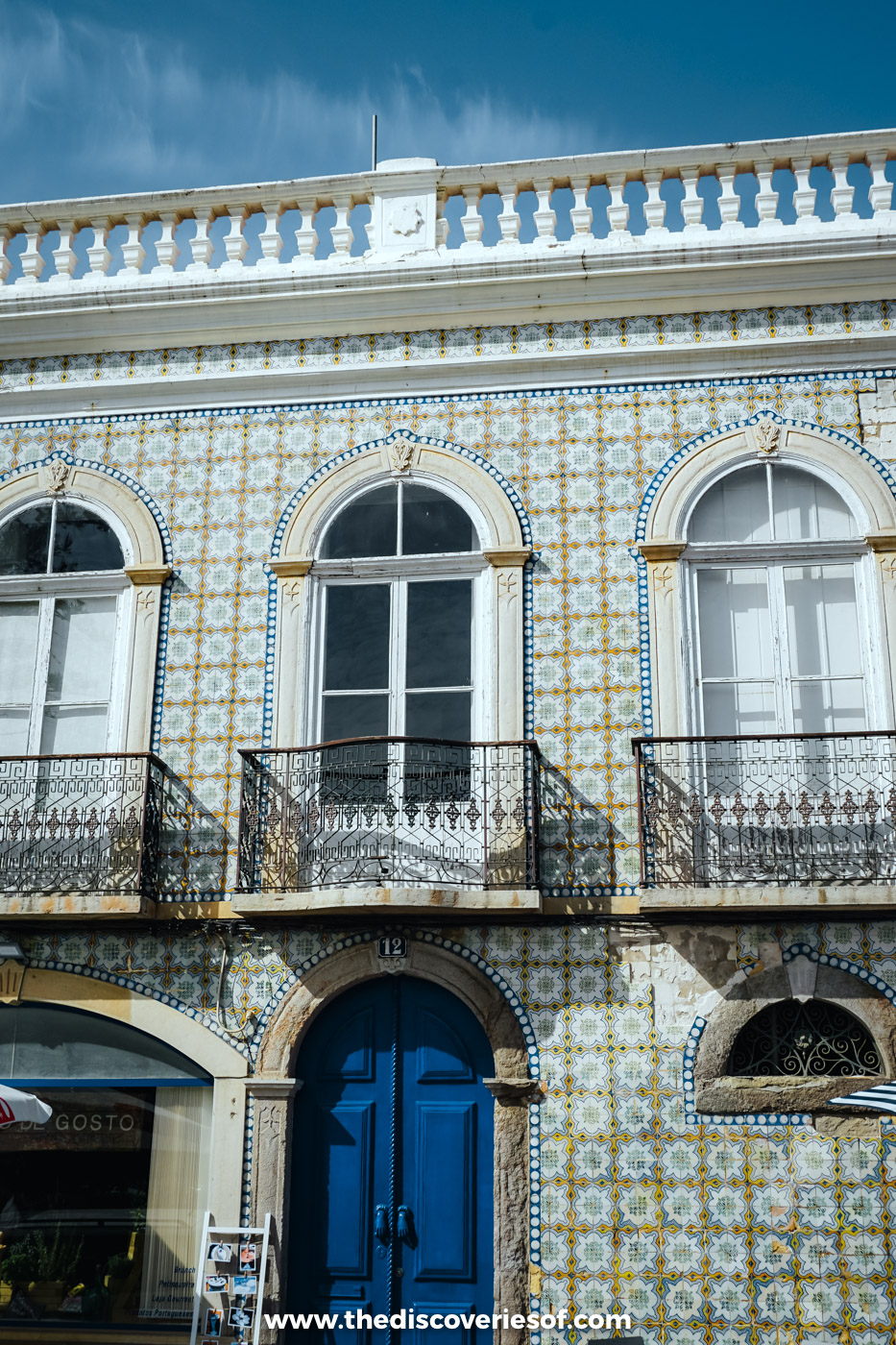
On the western bank, the Praça da República opens onto the river, with the old market hall, the Mercado da Ribeira, now home to cafés and small shops along the waterfront. From there, cobbled lanes climb towards the castle, past houses with tiled façades, wrought iron balconies and the town’s distinctive four-sided “tesoura” roofs, which you’ll rarely see anywhere else in the Algarve on this scale.
Cross the bridge to the eastern bank and things get quieter, with a tangle of residential streets and little squares where locals sit outside in the evening. There’s no real plan needed: wander, look up and stop for a coffee whenever you find a sunny corner.
Top Tip
Look out for the tiles. Many of the façades on the eastern bank are covered in them, from simple 19th-century patterns to elaborate panels, and the colours are at their best in the low light of late afternoon.
Climb the castle walls for the view over the rooftops
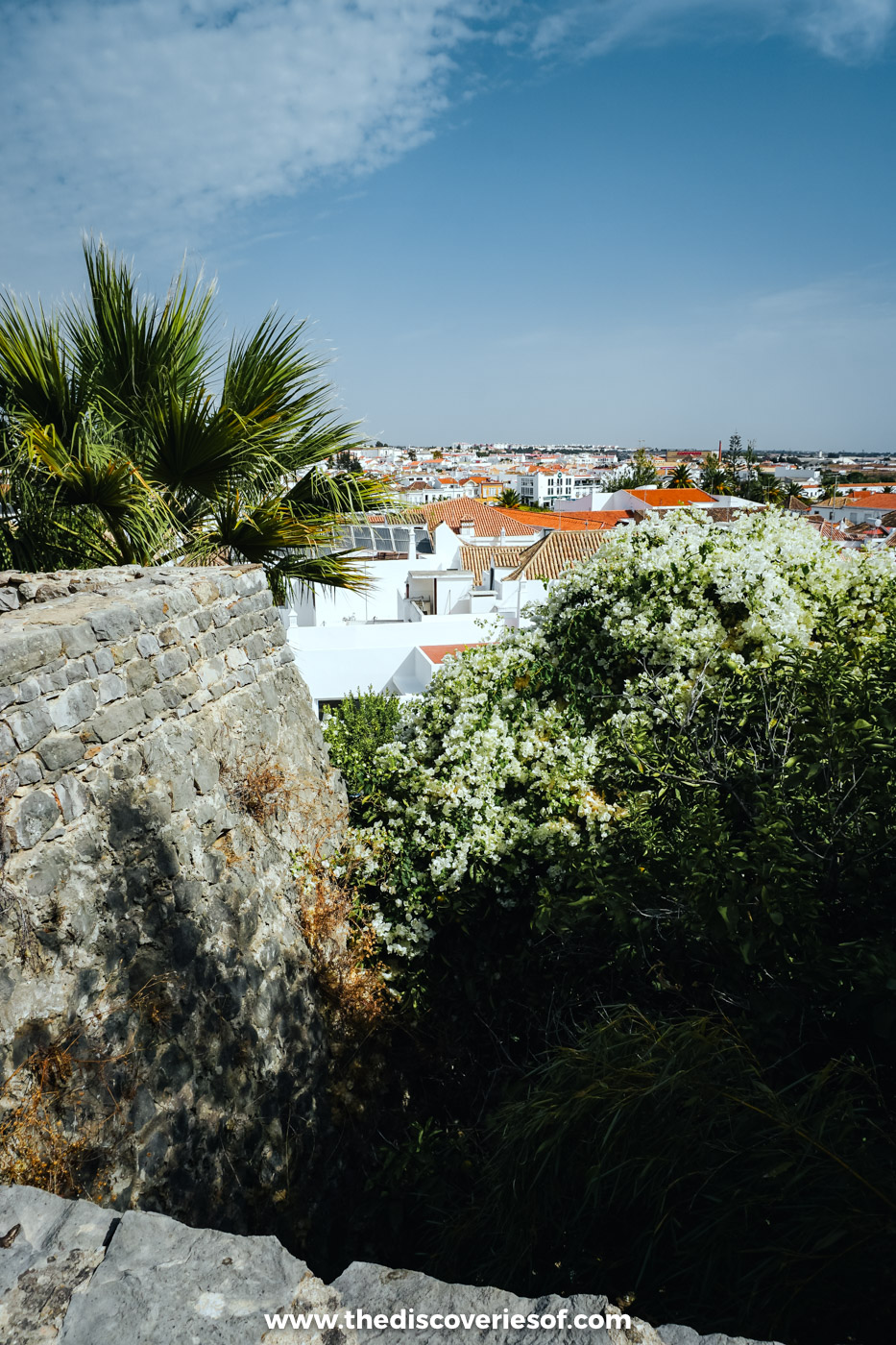
Perhaps no site in the town is more famous than the Castelo de Tavira, on the hill at the top of the old town. The oldest surviving walls date from the Moorish town of the late 11th or early 12th century, and King Dinis repaired and strengthened them around 1292, half a century after the Christian conquest.
There’s little left inside the walls but a pretty garden of flowers and shrubs. That’s not really why you come. Climb the steps to the battlements, which have handrails these days, and you look down over a sea of whitewashed houses and hipped roofs, church towers and the river winding out towards the salt pans and the lagoon.
Entry is free, and it’s usually open from about 10am to 5pm, with longer hours in summer. It’s a small site, so half an hour is plenty unless you’re lingering for the view.
Step inside Santa Maria do Castelo
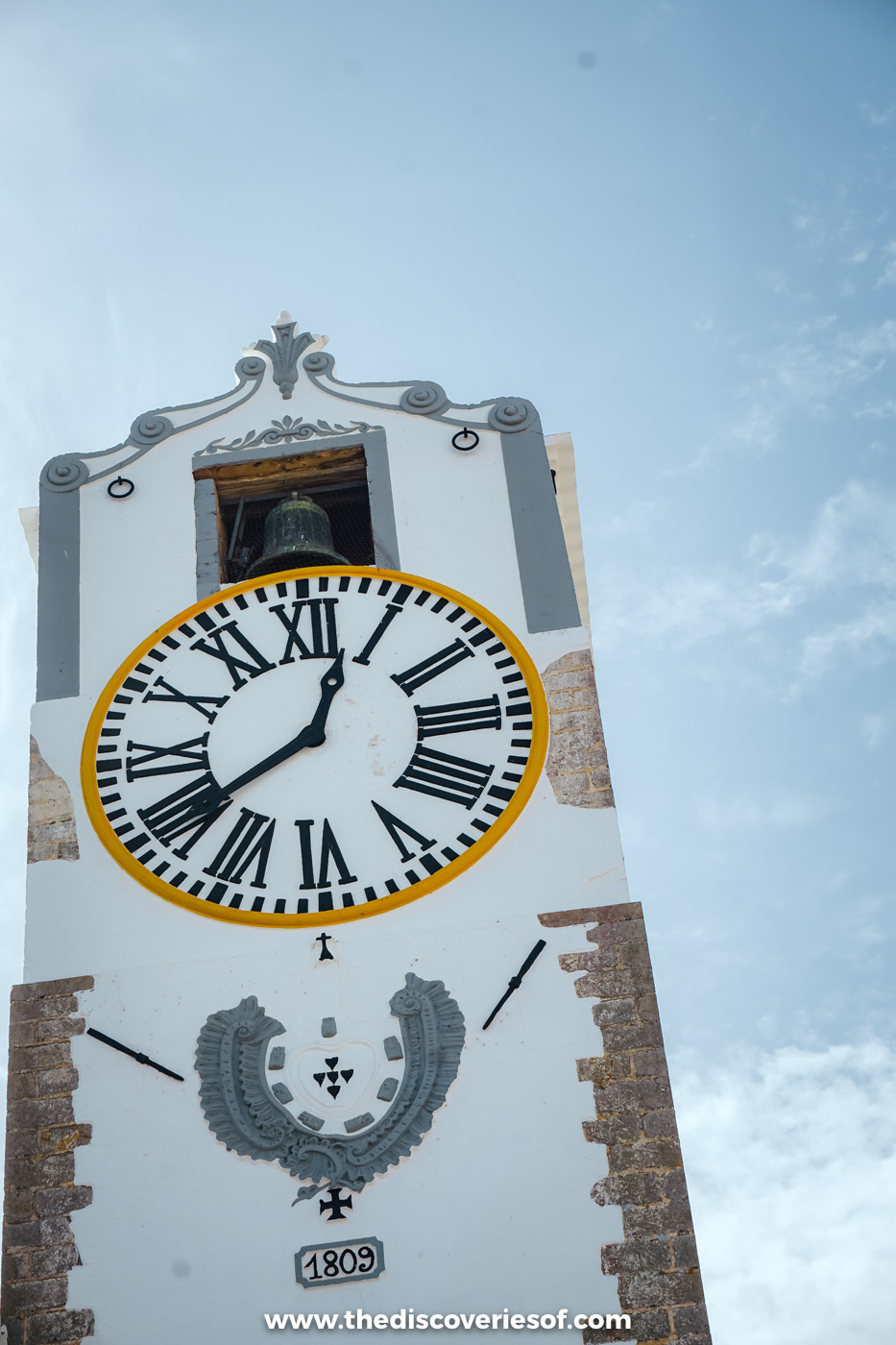
Right beside the castle, the Igreja de Santa Maria do Castelo is the town’s main church and a good place to understand its history. It was built in the 13th century on the site of the old mosque, soon after the town was taken from the Moors, and badly damaged in the 1755 earthquake, which is why its Gothic doorway and chapels sit alongside later neoclassical rebuilding, including the clock tower.
Inside are the stone tomb of seven knights of the Order of Santiago and a slab attributed to Dom Paio Peres Correia, the Order’s master, who took the town in 1242. Local legend says the attack was revenge for the seven, ambushed while out hunting with falcons.
The church is one of two in Tavira shortlisted in 2026 for the New 7 Wonders of Portugal, a competition for religious heritage. Its museum space, opened in 2019, is closed while restoration work goes on, and opening hours for the church itself vary with the season and services.
Go church-hopping
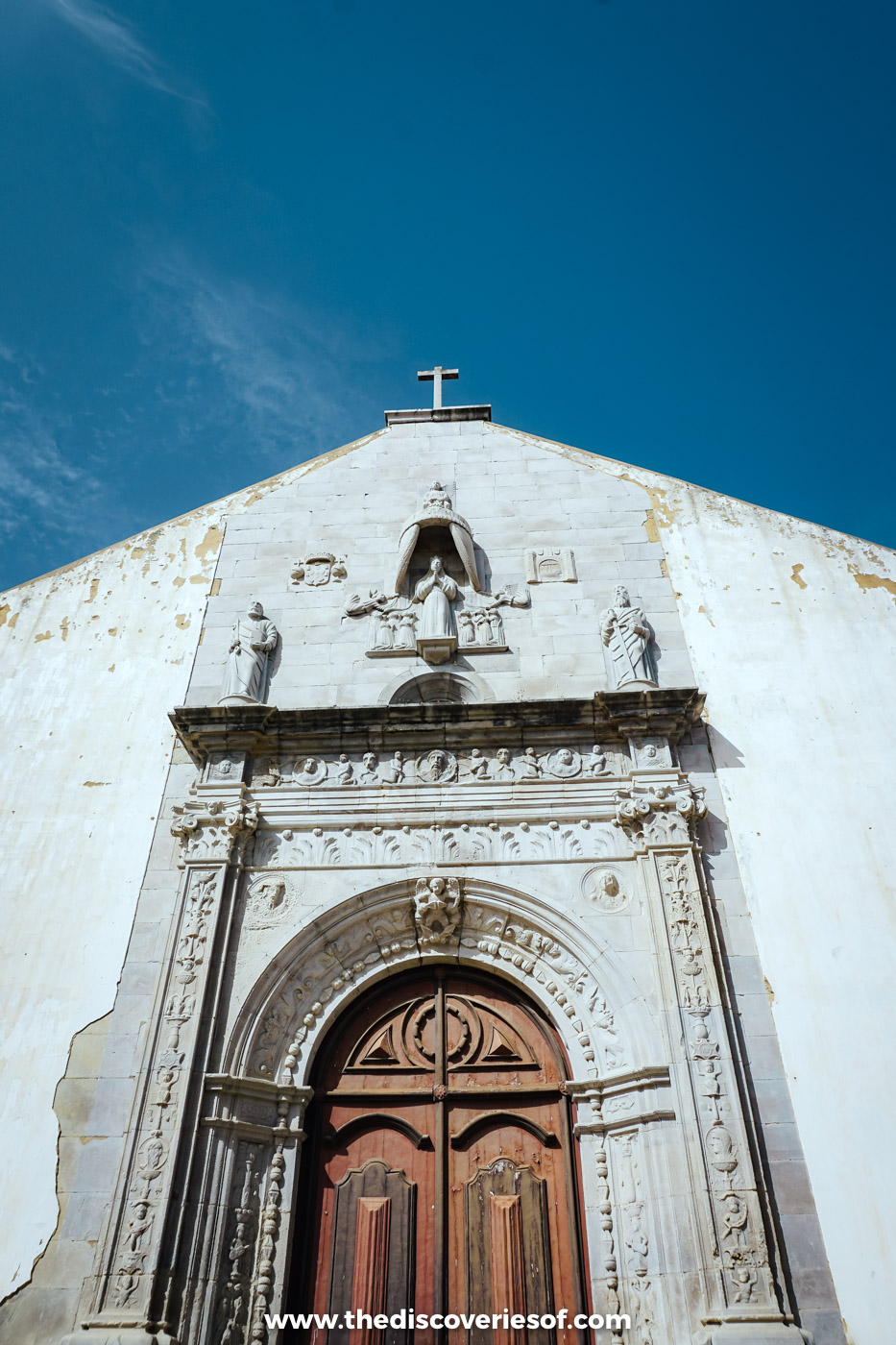
There are a dozen or more churches and chapels in the old town alone, which is a lot for a place this size. You won’t need to see them all, but a few are worth seeking out.
The Igreja da Misericórdia, founded in 1541, is the other contender for the New 7 Wonders. Its carved Renaissance portal is one of the finest in the Algarve, and inside, blue and white azulejo panels show the fourteen works of mercy beneath gilded Baroque altarpieces. The Igreja do Carmo, across the river, is all gilded woodwork, and the Igreja de Santiago, just below the castle, is a whitewashed landmark you’ll pass on the way up.
Opening hours are short and change through the year. Many churches open on weekday mornings and afternoons, often closing over lunch, and in summer the town runs a programme that keeps a dozen of them open with volunteer guides. Most are free, with a donation box by the door.
Uncover the town’s Phoenician and Islamic past
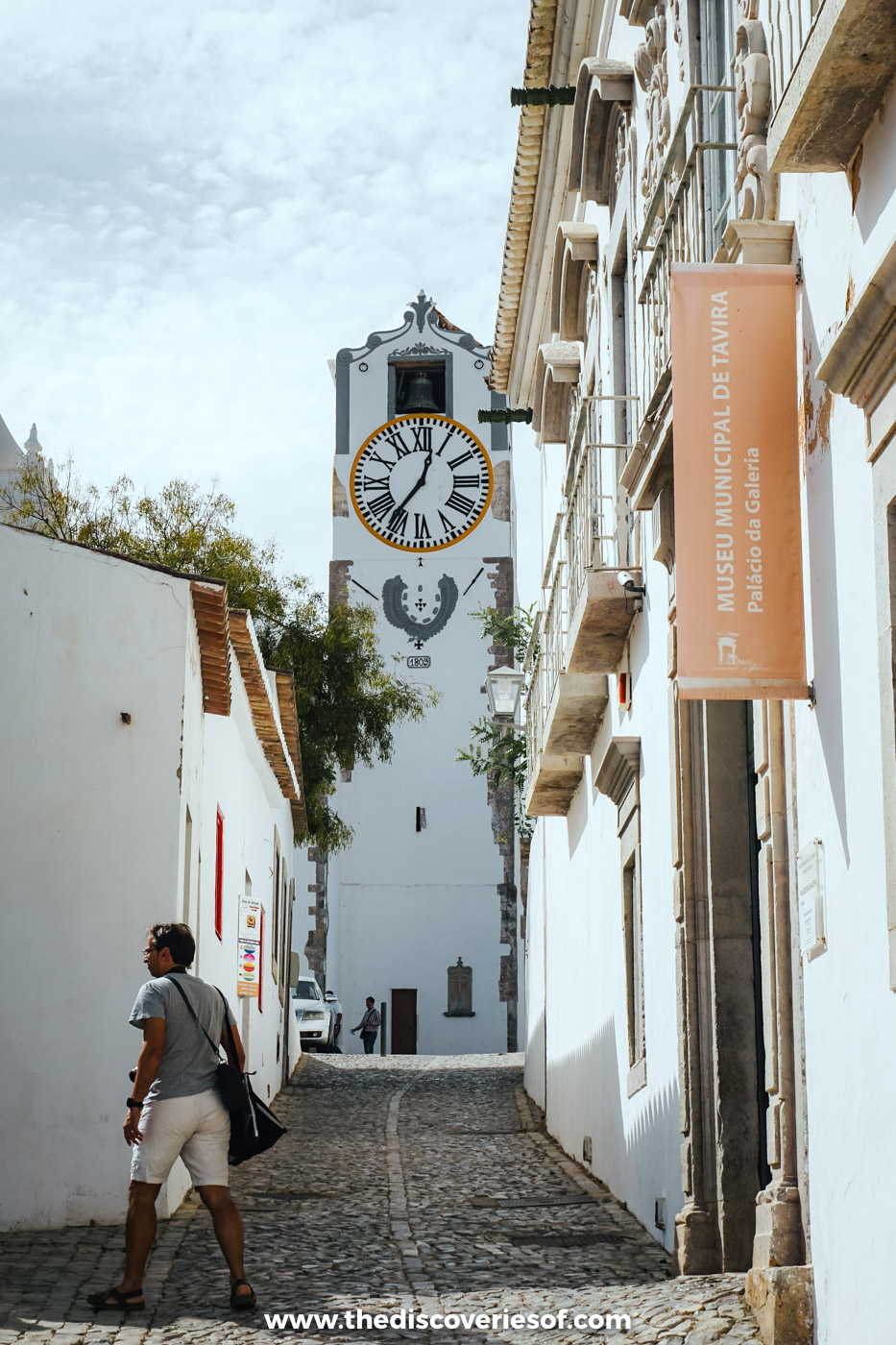
I’m a sucker for a town’s history, and here it runs a lot deeper than the castle. The Museu Municipal is spread across several sites, and two of them are the ones to see.
The Palácio da Galeria, a palace with a Baroque façade and a Renaissance courtyard, sits at the top of the old town. Under a glass floor in its atrium are wells cut into the rock in the 7th and 6th centuries BC, linked to the worship of the Phoenician god Baal. A few minutes away, the Núcleo Museológico Islâmico displays finds from across the town, including a stretch of 12th-century Islamic wall and the Vaso de Tavira, an Islamic-era vase ringed with tiny modelled figures of people and animals, which has been lent to exhibitions in Spain, France and Morocco.
A combined ticket for both costs €3. The museums open from Tuesday to Saturday, 9.15am to 4.30pm.
See the town from the old water tower
At the highest point in the old town, the Torre de Água was built in 1931 to hold the water supply. Today it houses a camera obscura, the first in the Algarve, which uses mirrors and lenses to project live, moving images of the streets, the river and the coast onto a screen in a darkened room about 30m up.
Sessions are short and run on weekdays, and the hours change with the seasons, so check before you climb the hill. Even if it’s closed, the walk up rewards you with a view across the rooftops to the sea.
Ride the little train to Praia do Barril and its anchor cemetery
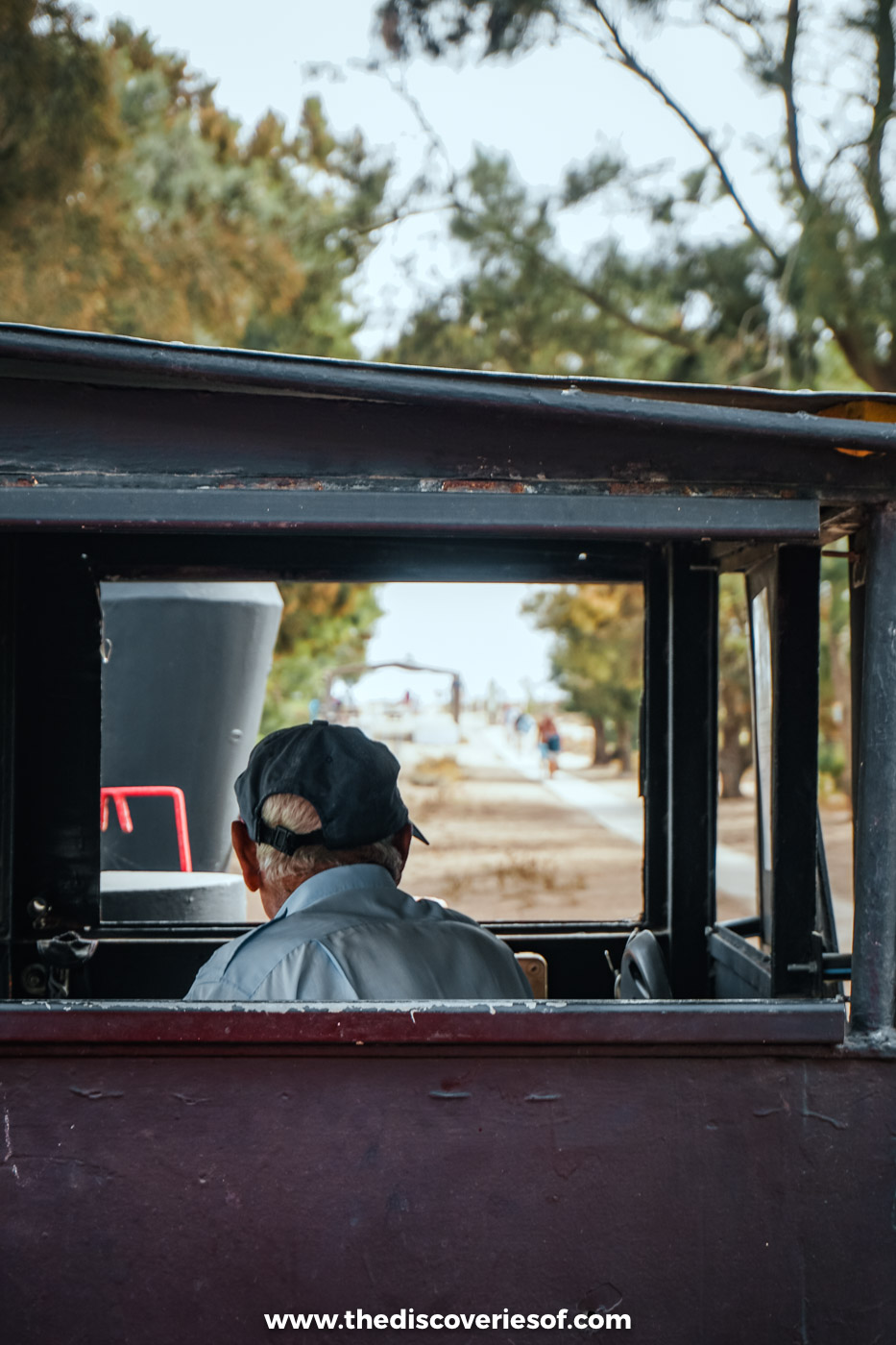
Of all the beaches around the town, Praia do Barril is the one I loved: wild, a little windswept and reached on a narrow-gauge train that feels like a toy. The beach sits on the long sandbar of the Ilha de Tavira, a few kilometres west of the town centre.
From the car park at Pedras d’El Rei, a footbridge crosses the lagoon, and from there you can either walk about 1.5km along the path beside the tracks or take the little train for about €2. At the end, in the dunes, waits the Cemitério das Âncoras: more than 200 old anchors laid out in rows, left behind when the tuna fishery here wound down around 60 years ago. The old fishermen’s cottages beside it now house cafés and restaurants.
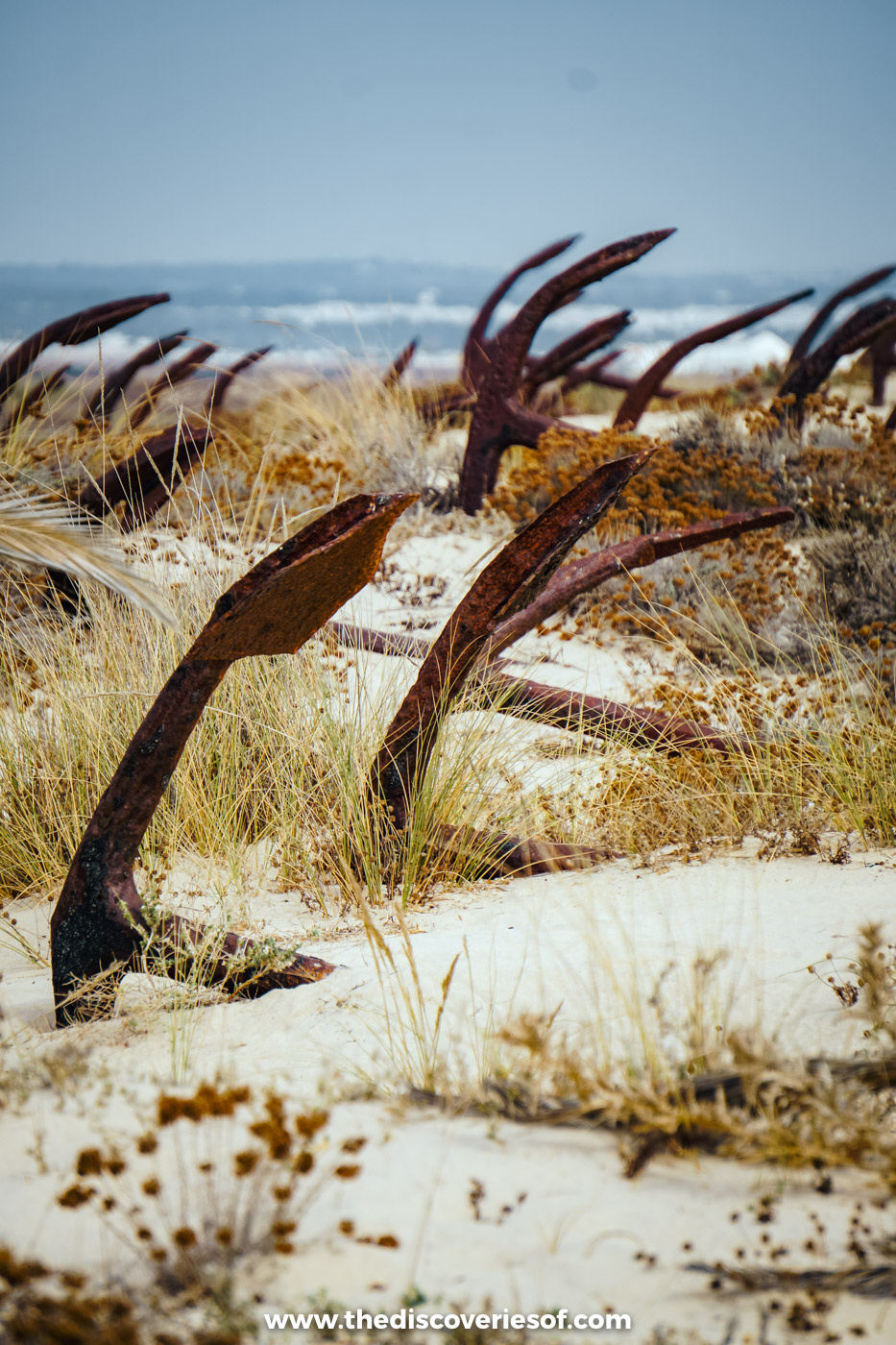
Beyond the anchors, the beach runs for miles. It has lifeguards in the bathing season and a Blue Flag, and further along the sand is Praia do Homem Nu, one of Portugal’s official naturist beaches. For more of the coast’s sand, from Ilha Deserta to the cliffs of the west, see the best beaches in the Algarve.
Take the ferry to Ilha de Tavira

The island across the lagoon from the town is one long sandbar of dunes and fine pale sand, and its main beach, right where the boats land, is the town’s beach. There are cafés, restaurants and a campsite by the landing stage, and the further you walk from them, the emptier it gets.
There are two ways over. From Quatro Águas, about 2km east of the centre, small ferries cross in under ten minutes all year round, for €2 return, every 15 to 30 minutes in summer and a few times a day in winter. From the Cais das Naus in the town centre, near the old bridge, boats take about 20 minutes and cost €2.70 return, but they only run from late March to the end of the season in autumn. In strong easterly winds, crossings can be cancelled at short notice, so check before you set out, and water taxis are a backup if you miss the last boat.
At the island’s western end, Praia da Terra Estreita is a quieter stretch of the same sandbar, reached by boat from Santa Luzia.
Explore the Ria Formosa lagoon
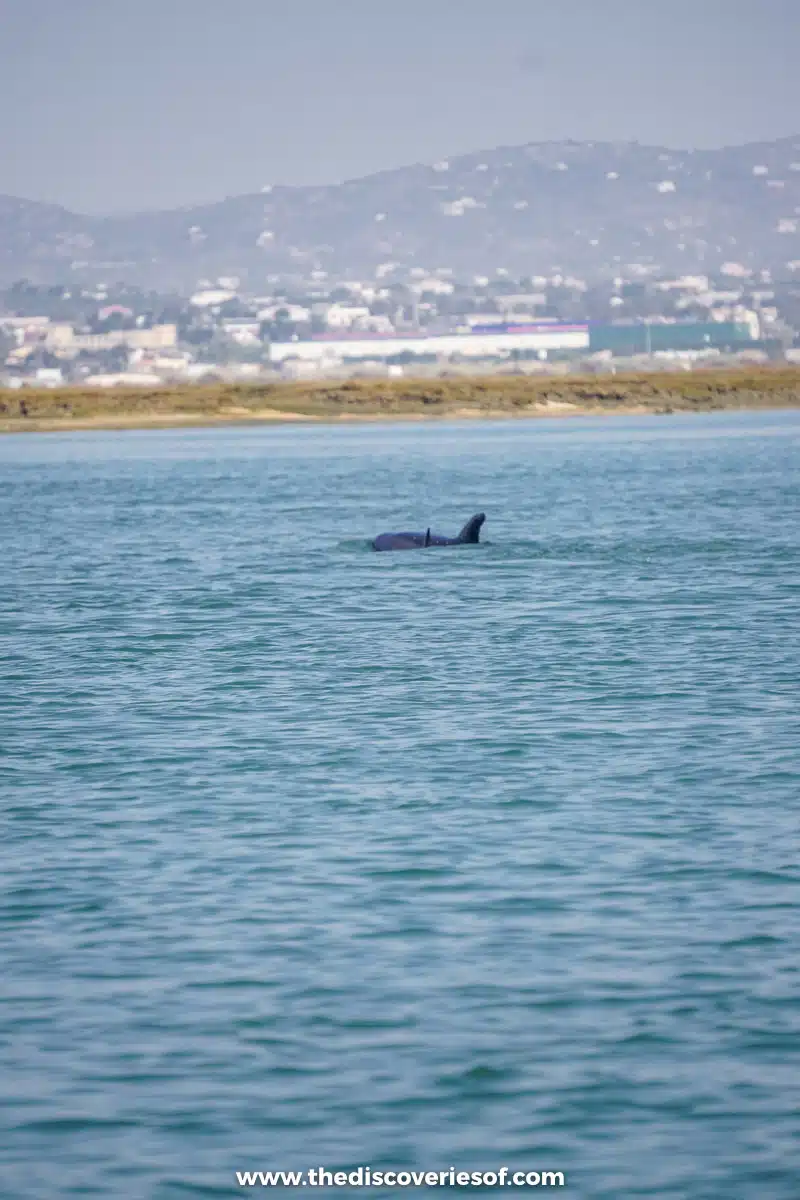
The town sits near the far eastern tip of the Ria Formosa Natural Park, a maze of lagoons, salt marshes, channels and barrier islands that stretches for about 60km along the coast. It’s one of the best places in Portugal to see wading birds, from spoonbills and egrets to flamingos on the salt pans east of the town.
I explored the western end of the lagoon from Quinta do Lago, where I stayed at Four Seasons Fairways, cycling out along its paths and taking a small catamaran to Ilha Deserta with a nature guide. Out on the water there were oysters, shore crabs, teals and curlews to look for and then, best of all, a handful of dolphins.
From the town, boat trips head out into the channels, and there are walking and cycling trails through the salt pans. Bring binoculars, and go early or late in the day, when the birds are most active and the light is softest. My guide to things to do in the Algarve has more on the western end of the park.
Eat octopus in Santa Luzia
Just west of the town, the fishing village of Santa Luzia calls itself the capital of the octopus, and it has earned the title: its boats have fished for octopus since 1927, after the tuna that first brought fishermen here ran out, and they still bring the catch in to the quay.
Come for lunch. The restaurants along the waterfront serve octopus every way you can think of, grilled with crushed potatoes, cooked into rice or in a rich stew, and the village is a pleasant place for a stroll along the lagoon afterwards. Elsewhere in the region, try the cataplana, a seafood stew cooked in a copper pan, and the tuna that made the town rich for centuries.
Look out over the lagoon from Cacela Velha
About 12km east of the town, the tiny village of Cacela Velha sits on a sandstone bluff where the Ria Formosa runs out of lagoon. It’s one of the smallest and best-preserved old villages in the Algarve, with whitewashed houses, a church and a fortress rebuilt after the 1755 earthquake.
The Knights of Santiago took it from the Moors in 1249. After the earthquake, most of its people moved inland to the new Vila Nova de Cacela, which is how the old village earned its name. The fortress is now used by the GNR, Portugal’s police, so you can’t go inside, but the square in front of it is one of the best viewpoints on the coast, looking out over the lagoon towards Manta Rota, Monte Gordo and Spain. At low tide, you can wade across to the beach on the sandbar; otherwise, small boats make the crossing.
Make short trips to Castro Marim and Vila Real de Santo António
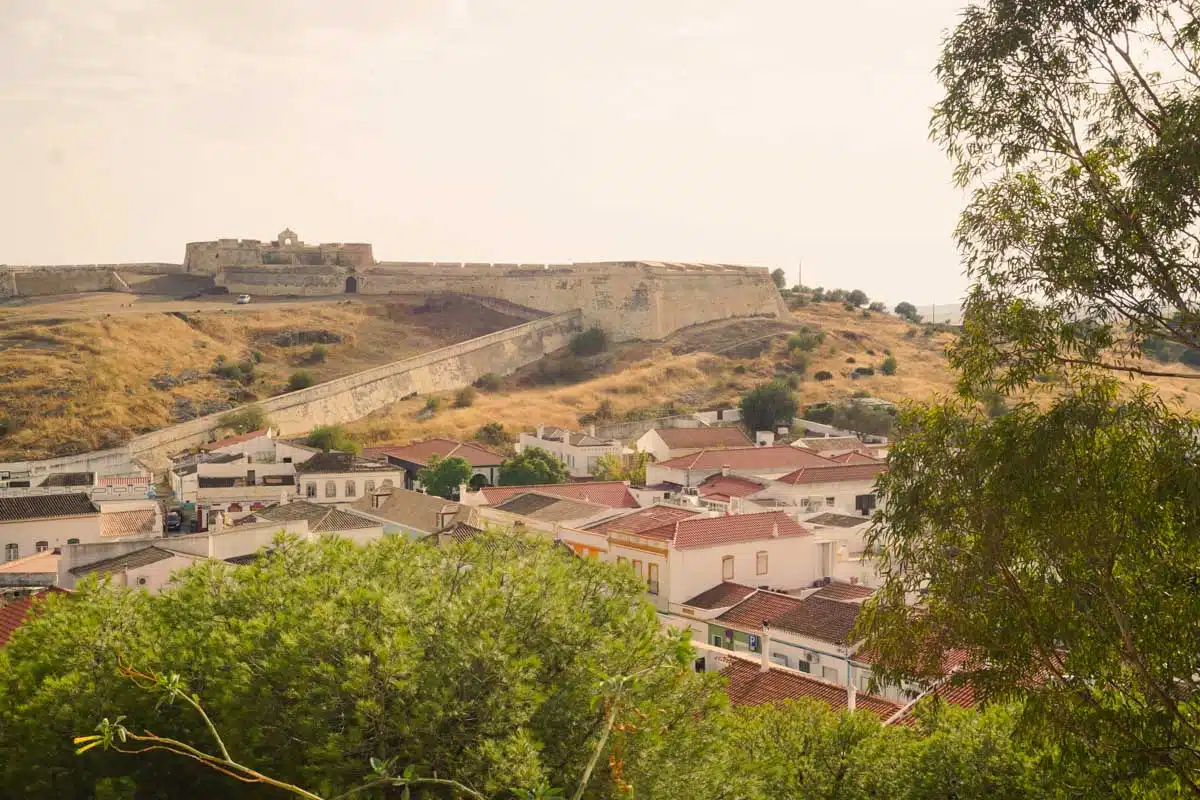
Carry on east and, after about 25 minutes, you reach the Guadiana, the river that marks the border with Spain. Two very different towns sit on its banks, and both make easy half-day trips.
Castro Marim, an old fortress across the river from Spain, has guarded this crossing for well over a thousand years. Its hilltop castle, rebuilt in the 13th century, was where the Order of Christ, which took over from the Templars, had its first seat, and from the ramparts Andalucía is right there across the water. On the next hill stands the star-shaped Forte de São Sebastião, built in the 1640s when Portugal was fighting to win back its independence from Spain. The salt marshes that surround the town are protected as a nature reserve, and flamingos feed there for much of the year.
A few minutes south, Vila Real de Santo António is the opposite: a town planned from scratch in 1774 by the Marquis of Pombal, on the same tidy grid as the Baixa in Lisbon. Come in the afternoon, when the pedestrianised streets come back to life after the siesta, and stop for a coffee and a slice of toasted cake. From the riverfront, a small ferry crosses to Ayamonte in Spain.
Trains also run from the town to Vila Real de Santo António in about half an hour, if you’d rather leave the car.
Spend a day in Faro
Faro, the capital of the Algarve, is a short train or bus ride west, and it’s easy to combine with a trip out to the islands. Inside its old walls, the Cidade Velha is a quiet cobbled quarter entered through the Arco da Vila, with the cathedral, the Sé, at its heart; climb its tower for a view over the lagoon.
Across town, the Igreja do Carmo has a chapel lined with the bones of monks, and boats leave from the harbour for Ilha Deserta and the other islands of the Ria Formosa. Finish with a cataplana before the train back.
Tips for your trip to Tavira
- Getting there: Faro airport is about 35 minutes away by car, and since January 2025 there have been no tolls on the A22, the motorway that runs the length of the coast. Without a car, take the bus or a taxi into Faro and the train from there.
- Getting around: the old town is small and best on foot, though the hill up to the castle is steep. The island ferries, the Barril train and the trains along the coast cover most of the rest, but a car makes Cacela Velha and Castro Marim much easier.
- When to go: spring and autumn are ideal, warm enough for the beach without the summer crowds; I came in October, once the summer rush was over. July and August bring the heat and the crowds, while winter is mild and quiet enough for a winter sun break, though the ferry from the town centre doesn’t run. For a month-by-month rundown, see the best time to visit Portugal.
- Where to stay: base yourself in the old town, close to the river, so you can walk everywhere. The Pousada Convento de Tavira, in a 16th-century convent, is the classic choice (note that it shuts for renovation between 2 November and 22 December 2026), and AP Maria Nova Lounge is a short walk from the centre with two pools. For the rest of the Algarve, see where to stay in Portugal.
- Check church hours: they’re short and change often, so if one is high on your list, ask at the tourist office on the Praça da República before you climb the hill.
Map
Read next
- The best things to do in the Algarve
- The best beaches in the Algarve
- Where to stay in Portugal
- Is a villa at Four Seasons Fairways the best way to do the Algarve?
- How to spend one week in Portugal
- The best things to do in Portugal
Love this? Save and share on Pinterest
Discover the top things to do, insider tips and hidden gems in our Portugal Travel Guides.
Read the guides →